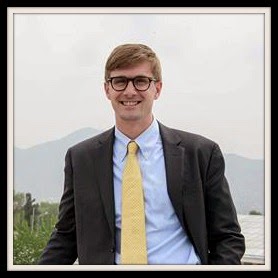
We are extremely fortunate to have such an impressive, dynamic and diverse membership, engaged in some of the most pressing and important international human rights issues across the world as practitioners, advocates, academics, and concerned members of the bar. We wanted to provide a forum to allow our members to learn about each other and the great work our members are doing around the globe. This inaugural edition of the "IHRC Member Spotlight" features second-year law student and new member, Karen Hopkins, and our former co-chair, Mrs. Olufunmi Oluyede. Enjoy and look for future Member Spotlights on this blog. -Natalie Williams, IHRC Vice Chair of Outreach
Olufunmi Oluyede (Mrs.)
Senior Partner, TRLPLAW
Former Co-Chair IHRC
1. Tell us about your practice and what sparked your interest in international human rights law.
TRLPLAW is primarily a Swiss verein. It’s a consortium of international commercial law firms with a multinational practice within two core practice areas -a dispute resolution practice and a transactions practice. These essentially comprise banking and finance, civil and criminal litigation, alternative dispute resolution, corporate and commercial law, energy and natural resources, maritime and admiralty, entertainment law, intellectual property, property law, etc. We operate out of various offices in Nigeria, the UK, USA and pretty much everywhere our services are required globally.
The promotion and protection of the value/significance and interests of humans (i.e. human rights) at the domestic, regional -and especially international level is central to a wholesome global corporate citizenship. The dire need to maintain the human dimension of our work, and to ensure a sense of social responsibility in dealings with the rights, relations, and conduct of persons and businesses engaged in transnational commerce, is accordingly, a sine qua non to success in my area of practice. That in essence, inspired my personal interest in international human rights law ab initio.
2. What do you like most about your practice?
The commerce world is generally viewed as a productive one. However, inter alia, I mostly enjoy the fact that ours is an exciting, fast-paced environment with high-end, often complex litigation and challenging transactional legal work -all under the able auspices of specialized, experienced partner-colleagues in various jurisdictions regionally and globally. This structure, per se, provides the much-needed foundation for individual and corporate success.
3. Tell us about some interesting human rights matters you have worked on.
There have been quite a few. During the years of military dictatorship in Nigeria, we’ve argued landmark cases in Habeas Corpus and Fundamental Human Rights Enforcement in the UK. In recent times, we’ve had cases involving rights to property as protected by the African Charter on Human & Peoples’ Rights. We’ve obtained judgment for high-end clients for breach of fundamental rights of presumption of innocence vis-à-vis investigations into the administration of Government subsidy regarding certain regulated petroleum products. There have been various cases (unlawful detention et al) arising from the abuse of investigative and prosecutorial rules of the Economic & Financial Crimes Commission.
4. How long have you been a member of the International Human Rights Committee?
The Committee was my first/paramount choice when I joined the ABA SIL in 2008 -about six years ago.
5. What initiatives have you most enjoyed and what would you like to see the Committee tackle in the future?
I’ve pretty much enjoyed all aspects of the work of the Committee. Becky and I (as Co-Chairs of the Committee) had an outstanding support team of assiduous members -with whom we were able to excel in every sphere of endeavor -culminating in the phenomenal growth of the Committee -plus that momentous six awards Incident in one legal year! That I will always cherish. Great to see the current leadership also progressing in leaps and bounds. I would however want to see the Committee accomplish even greater exploits than we did -with every initiative and in every area -be it programs, policy, publication et al. Moreover, we would do well to carefully maintain our ‘international’ outlook (and also that of the Section) by ensuring a global geographical diversity and perspective generally in all our undertakings. After all, we are the International Human Rights Committee of the International Section of the ABA!
Juris Doctor Candidate, 2L
UDC David Clarke School of Law
1. What sparked your interest in international human rights law?
I am a rising 2L studying human rights and international law at UDC David Clarke School of Law in Washington, DC. UDC Law is best known for its clinical programs and public interest focus.
I am currently interning for the Department of State's Bureau of Democracy, Human Rights and Labor. In May, I will begin a six-month internship with the International Criminal Court's Trust Fund for Victims.
My interest in development and human rights began at age 15 when I traveled to Haiti. I witnessed challenges families face such as severe malnutrition, untreated HIV/AIDS, and overcrowded classrooms. I also caught a glimpse of families who would share their meal of rice and beans with strangers, doctors developing creative methods to stop the advancement of disease, and students who would help their siblings with homework by candlelight. This dichotomy was both the most profound injustice I’ve ever witnessed and also the most profound steps toward justice; steps taken by ‘ordinary’ people. Haitians taught me three core values: no matter where you come from, education is a route out of poverty, youth are society’s most powerful and passionate change- makers, flaws inherent in global political and social structures perpetuate the cycle of poverty and human rights violations. This experience cemented my resolve to work to transform the systems that create and maintain the cycle of human rights abuses that affect individuals and communities at home and abroad.
2. What excites you most about your upcoming internship?
The Trust Fund for Victims (TFV) provides assistance and implements projects for victims of war crimes and crimes against humanity. The TFV provides victims and families in Uganda and the Democratic Republic of Congo with physical rehabilitation, material support, and/or psychological rehabilitation. Survivors of torture, mutilation, and gender-based violence receive support through reintegration programs, educational opportunities, health and counseling services that incorporate both gender-specific and child-specific interventions. www.trustfundforvictims.org.
An internship with the ICC unites the intersecting elements of human rights, development and protection of vulnerable communities through social justice and legal mechanisms. My internship duties will include:(1) research, including research in international criminal law, transitional justice and the operational
realities of assisting victims of mass atrocities; (2) drafting of memoranda, speeches, minutes and other documents and input for internal and external reports; and (3) assisting Secretariat staff with tasks related to project management.
3. Tell us about an interesting international human rights matter you have worked on.
As a servant-leader, I have contributed to various human rights campaigns in Asia, Africa and Latin America. I developed youth- led human rights education programs and engaged youth in raising awareness about the impact of genocide and modern forms of slavery among their peers. In 2008, I was awarded Amnesty’s Human Rights Fellowship and sent to Burkina Faso to help document the first West African Youth Forum. Youth leaders petitioned for the release of Nigerian youth named Patrick Okoroafor, imprisoned for 14 years and sentenced to death for stealing. As a result of these advocacy efforts, Nigeria commuted the death sentence and Patrick was finally released in 2012.
Based on this experience and other volunteer work, I published a paper in the Journal of Human Rights Practice entitled "Amnesty International's Methods of Engaging Youth in Human Rights Education: Curriculum in the United States and Experiential Learning in Burkina Faso." The paper compares Amnesty's Human Rights Education Service Corps curriculum-based awareness approach to working with DC high school students and a transformational approach to experiential learning through Amnesty's first Youth Forum in Africa in Burkina Faso.
4. Why did you decide to join the International Human Rights Committee and what issues or initiatives are you most interested in working on as a member of the committee?
I hope to dedicate my career to combating the most egregious rights violations: modern slavery and genocide perpetuated by illicit trades in people, natural resources and arms. I also feel very passionate about the importance of human rights education to engage youth in thinking critically about human rights in their communities and strengthening youth participation in creating positive change through activism. I joined the IHRC to begin meeting with others in the field with similar dedication to social justice and to get involved in programs such as the ICC Project, Anti-Human Trafficking and education of decision makers about the importance of integrating human rights into decision-making processes.
*Contact IHRC's Outreach Vice Chair if want to join the International Human Rights Committee, be featured in an upcoming IHRC Member Spotlight or recommend another member you'd like to see featured.